
Trace Former Owners Through Calumet County Records
Begin with the newest deed naming the present owner of record. That instrument identifies the grantor, usually the prior owner. Each name becomes a grantee in an earlier deed. Calumet County publishes no first year for its online deed index, so leave coverage open until the Register of Deeds confirms the period. Tapestry covers the current online chain. Paper records, plats, and vital collections supply land and family context, though only the deed proves a transfer.
| Record trail | Known period | Custodian | Use in a backward search |
|---|---|---|---|
| Tapestry deed index | Online cutoff not published | Register of Deeds | Recorded parties, dates, and document detail |
| Deed books and indexes | Ask the office for the relevant run | Register of Deeds counter | Continue before or outside the web index |
| Plats and CSMs | County series; exact range not stated | Register of Deeds and Land Information | Match lot, block, parent tract, and split |
| Vital and genealogy indexes | Local holdings back to 1846/1852/1866 by type | County and state research collections | Identify a family or estate clue, not land title |
Run the online chain through Tapestry first. When it ends, ask the Register of Deeds which paper index or book covers the next stretch. A plat helps reconcile conflicting land descriptions. Historic vital indexes can point to a person or an estate, but the deed remains the record of the land transfer itself. Calumet County reports no record loss or universal cutoff date.
Build a Calumet County Deed-Chain Worksheet
One line per transfer keeps the search honest. Two people can share a name in Calumet County records. For each deed, note the instrument date and the separate recording date, then copy the deed type, document reference, and legal description. Today's grantee becomes the earlier grantor. The parcel description, not the name, is what ties each link to the same land.
| Step | Name direction | Details to retain | Match test |
|---|---|---|---|
| Latest transfer | Current grantee | Date, grantor, document number, deed type | Parcel and legal description agree |
| Earlier acquisition | That grantor as grantee | Recording reference and book/page if shown | Same land or a documented parent parcel |
| Next step back | Repeat grantee-to-grantor | Names, dates, lot or section description | No unexplained jump between parcels |
The worksheet earns its keep on name-only matches. When a Calumet County online result matches nothing but a surname, log the uncertainty rather than filling the missing link with an assumption.
Calumet County Tapestry Name Searches
Calumet County's Tapestry page describes pay-as-you-go deed searching. Each search costs $6.95. Document detail is free once you open a result. Printed images cost $1 per page. The Register of Deeds also offers Laredo for frequent users, who apply for a subscription under a county contract. Because the county publishes no online cutoff, treat Tapestry as a current index route rather than proof that every deed year is indexed.
Wisconsin Tapestry guidance stresses exact last-name spelling. A partial first name works, but skip middle initials. Search grantor and grantee directions separately. Try name variants only when the land description and dates stay plausible, since two people sharing a name make false hits easy, and a failed hit may just reflect spelling or an unindexed period.
Open the Tapestry entry point for Calumet County before starting the online chain. Grantor and grantee results deserve checks in both directions. Variants only help when the land description still fits.
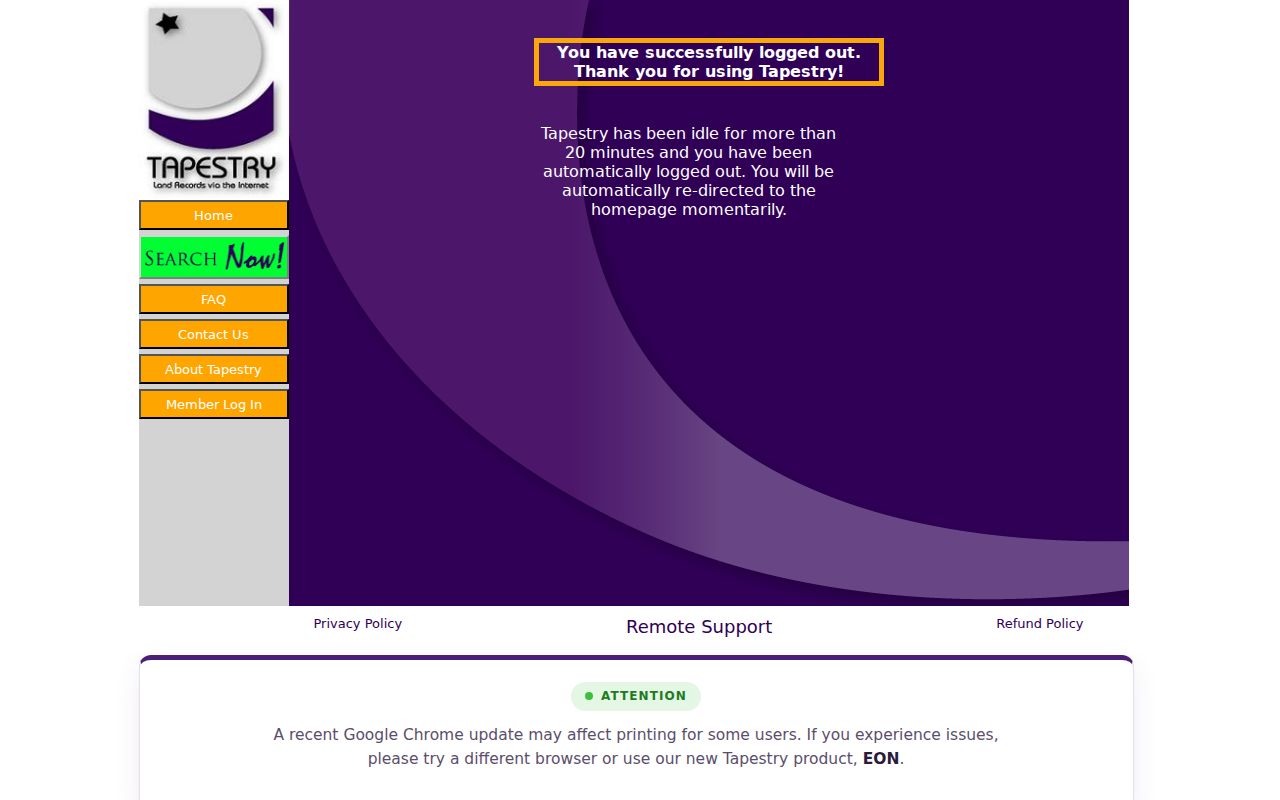
Copy the reference for each useful result. A later book or counter search can then start from a known instrument instead of a guess.
Calumet County Books Before the Online Index
Calumet County publishes no first Tapestry year. Borrow no cutoff from another Wisconsin county. The Register of Deeds can say which grantor-grantee index, tract index, deed book, or microfilm series holds the year you need. Give staff the party name, an approximate date, the municipality, and the legal description or parcel reference.
County history traces a move from bound books and indexes to digitized images and remote searching. No single imaging cutover is named. No courthouse fire, flood, or record-loss story appears either. When the chain stops, ask what volume follows the last Tapestry year. A paper index may need checking first. A gap on a screen does not end an owner chain.
The Register of Deeds office sits at 206 Court Street in Chilton. Hours are 8:00 a.m. to 4:30 p.m. on weekdays. Older Calumet County entries are a question for the custodian.
Plats, CSMs, and Older Calumet County Parcels
An old Calumet County deed may describe a farm by quarter-quarter, section, township, and range. A modern tax parcel carries a Location ID instead. City transfers often cite a subdivision, lot, and block. A certified survey map can divide a parent parcel. It adds no conventional plat name, and Calumet County approves such divisions in incorporated and unincorporated areas alike. The recorded plat or CSM explains lot changes that a name search never will.
When a deed chain splits a large tract into smaller parcels, compare acreage, road calls, adjoining land, and recorded survey references. The GIS map shows present geometry. The deed describes the recorded interest. A parcel number may be newer than the instrument. Keep the old and current descriptions side by side, and let the Register of Deeds or Land Information Office point you to the right map series.
Use the Calumet County deed-records access route for recorded instruments and plat details. Old maps pair well with a parcel search, and the deed records there run deeper.
Walk the Calumet County Chain Backward
Begin with the most recent deed, the one naming the current owner as grantee. Note the grantor. Then hunt for that grantor as a grantee in the next older deed. Keep stepping back one transfer at a time. At every link, match the land description. Match the recording reference too, so the Calumet County chain stays honest. The work moves backward through time. But each Calumet County property search follows the deed's party roles. It never follows a guessed year or a modern street address.
- Find the current deed and copy its grantee, grantor, date, and land description.
- Search the grantor as a grantee to find that party’s acquisition.
- Check whether the description matches the same parcel or a documented parent tract.
- Repeat until the web index stops, then ask the Register of Deeds for older books.
- Grantor
- The party who gave or conveyed an interest.
- Grantee
- The party who received the interest named in the deed.
- Chain of title
- The ordered recorded transfers tied to one parcel or tract.
- Legal description
- The land wording that ties an old deed to current parcel geometry.
Estate Transfers in a Calumet County Chain
A death can change the name on the next deed in a Calumet County chain. The instrument may name an estate, a personal representative, a trust, a beneficiary, or a trustee. It may stand in for the owner of record. Search the decedent's name and any estate name in Tapestry. WCCA can add public probate case detail. It may help explain who had authority to transfer land. Treat the docket as a lead only. It may leave out the full inventory, the will, the account, or confidential exhibits.
A death record is an identity clue, not proof that someone owned land. Calumet County's genealogy holdings reach back to births in 1852, deaths in 1866, and marriages in 1846. Restrictions and research-room rules are attached. Let the deed itself confirm the grantee and the land description. A probate entry can supply context. It never replaces the recorded deed. The county's genealogy-records page lists the local holdings and the rules for researchers.
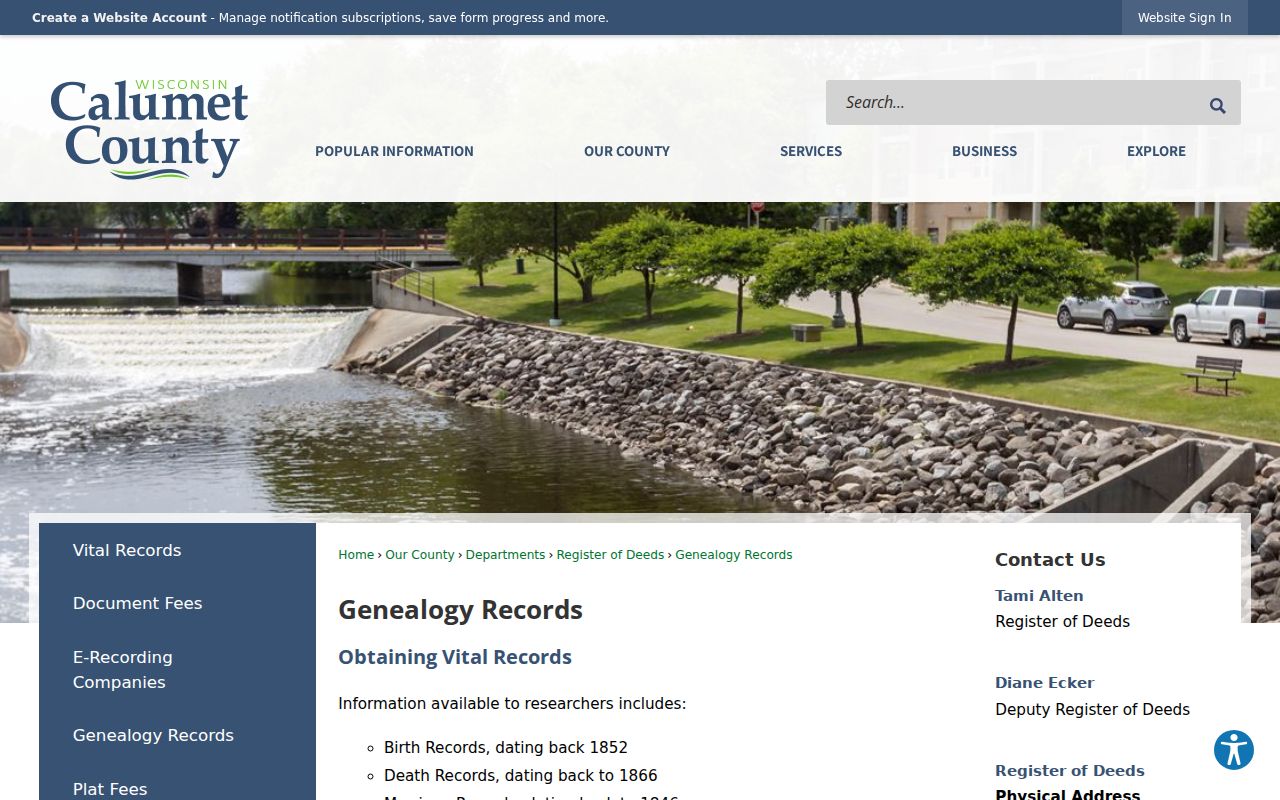
A family paper trail can point to the right owner of record. Yet only the deed proves the land moved. The recorder's deed records settle the question. Family notes help, but the parcel history lives in the recorded documents.
For a certified copy, the county's Vital Records page spells out the application route. It also lists the fees and what identification to bring. Follow those steps and the recorder handles the rest.
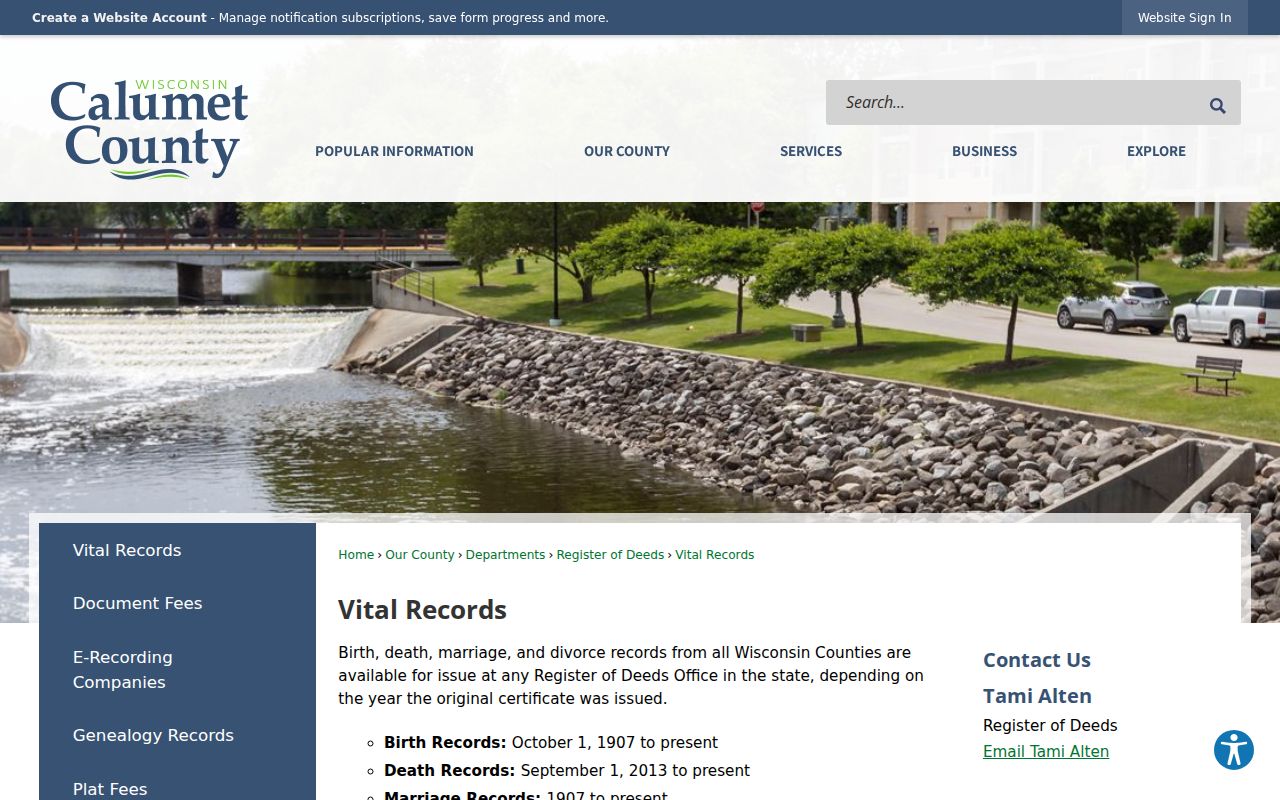
Those fees and forms belong to vital records, not to deed copies. Deed copies come from the Register of Deeds under a separate process.
Wisconsin Vital Indexes for Calumet Research
Wisconsin opens generous index windows for genealogy work. Birth indexes run from the earliest filed records through September 30, 1907. Later indexes reach 1984. Death indexes extend through 2016, though access to the records themselves follows separate rules. Marriage and divorce indexes carry their own year ranges. The state notes that not everything sits online. For pre-October 1907 searching, the Wisconsin Historical Society holds the pointers.
Vital records serve one purpose here. They pin down an identity or a family event behind a deed name. Certified copies depend on record type and eligibility law. The Calumet genealogy room asks for identity proof, a signed agreement, and pencil-only work. No cameras or phones. Space is tight. Hours run 8:30 a.m. to 4:00 p.m., so call ahead before traveling.
Wisconsin DHS details the state genealogy search holdings and what they cover.
The state index can place a person or a date. But a deed or plat is what ties the name to the land.
How Far Calumet County Ownership Records Reach
Neither the earliest Tapestry year nor the first deed-book year is published. The safe answer: the online chain covers whatever the county has indexed. Its starting point rests with the Register of Deeds. Ask that office which paper books or indexes reach back further. Nineteenth-century vital holdings exist in Calumet County too. Those dates say nothing about when land recording began.
Lawful use. Use former-owner research for house history, a title review, or property diligence. Do not use it to track, harass, threaten, or expose a living person.