
Deed Types in Calumet County Land Records
A recorded deed is an instrument the county accepts into its land record. It names the parties. It describes a transfer or other change. The label on a document can hint at why it was filed. The full text and legal description matter more. The Register of Deeds posts recording requirements and fee information, but its public page does not show a complete live Tapestry document-type menu, so the common forms below serve as a field guide rather than an official list.
| Deed Type | What It Does | Common Use |
|---|---|---|
| Warranty deed | Conveys the grantor’s interest with warranties stated in the deed. | Review a sale or transfer. |
| Quitclaim deed | Transfers whatever interest the grantor holds, without a promise of full title. | Family or trust changes; read the terms. |
| Personal representative or trustee deed | Shows a fiduciary acting for an estate or trust. | Confirm authority and related filings. |
| Correction or transfer instrument | May clarify, correct, or document a parcel change. | Compare it with the earlier instrument. |
| Mortgage, release, or easement | Not a deed transfer, but may affect a land interest. | Check the affected legal description and later filings. |
A mortgage or lien is not a deed. It does not convey ownership at all. An assignment shifts the creditor of record, a release or satisfaction clears a prior instrument, and an easement can grant one party a limited right over land without changing the owner. Calumet County deed records hold all of these types. A clean-looking transfer entry does not by itself settle every burden on a parcel.
Tapestry and Laredo Access for Calumet County Deeds
The Register of Deeds runs two online routes into Calumet County deed records. Tapestry suits occasional users. It costs $6.95 per search. Each printed image page adds $1. Detailed document information stays free once a result opens. Laredo targets frequent users. A county contract and subscription application are required, and the fee model differs from pay-as-you-go.
The county's Tapestry page leaves gaps. No earliest index or image year appears, and not every live-form control is published either. Ask the Register of Deeds whether your period and instrument type are indexed online or held in an older book. A missing online hit is not proof that a deed went unrecorded.
Calumet's Tapestry and Laredo fee notice explains the price split. The search fee and the image fee are separate steps.
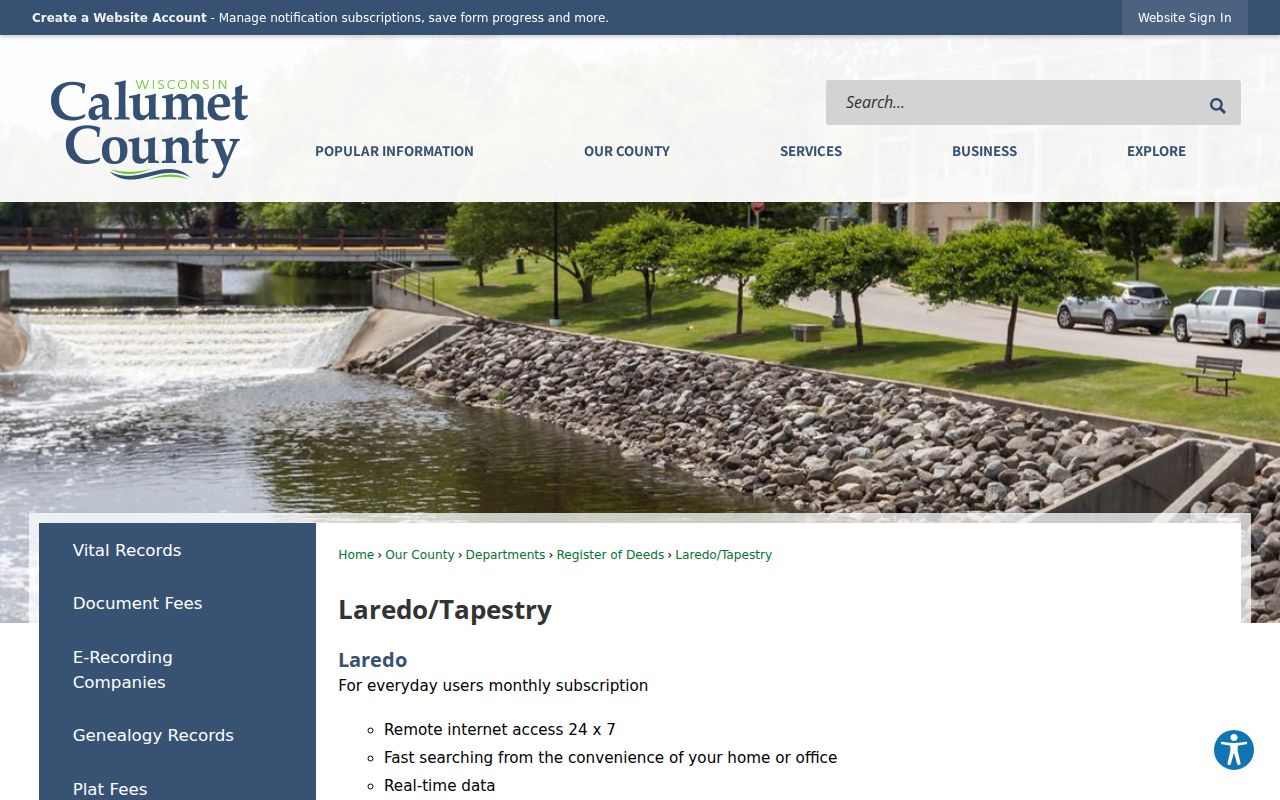
Open the document detail before paying to print. The county says detail can be viewed without an image-print charge.
What the Calumet County Online Index Confirms
Calumet County confirms Tapestry as its search route. The public text lists no exact form fields, document-type values, or result cap for its real-estate records, and no coverage start either. The search concepts still apply. Look for a party name first. Recording date, instrument number, legal description or tract clues, and book/page references round out the list. Treat it as a checklist, not a map of the current interface.
| Search clue | Why it helps | Local limit |
|---|---|---|
| Grantor or grantee name | Find a party on a transfer | Exact last-name spelling matters; try variants. |
| Recording date | Separate the filing from the sale date | Earliest online year is not published. |
| Instrument number | Return to one recorded document | Copy the reference from the source record. |
| Legal description | Distinguish same-name parties and parcels | Older records may use book/page or tract indexes. |
The official Tapestry entry screen is the starting point. Wisconsin Tapestry guidance offers a tip. Type a partial first name if needed, drop the middle initial, and keep the last name exact.
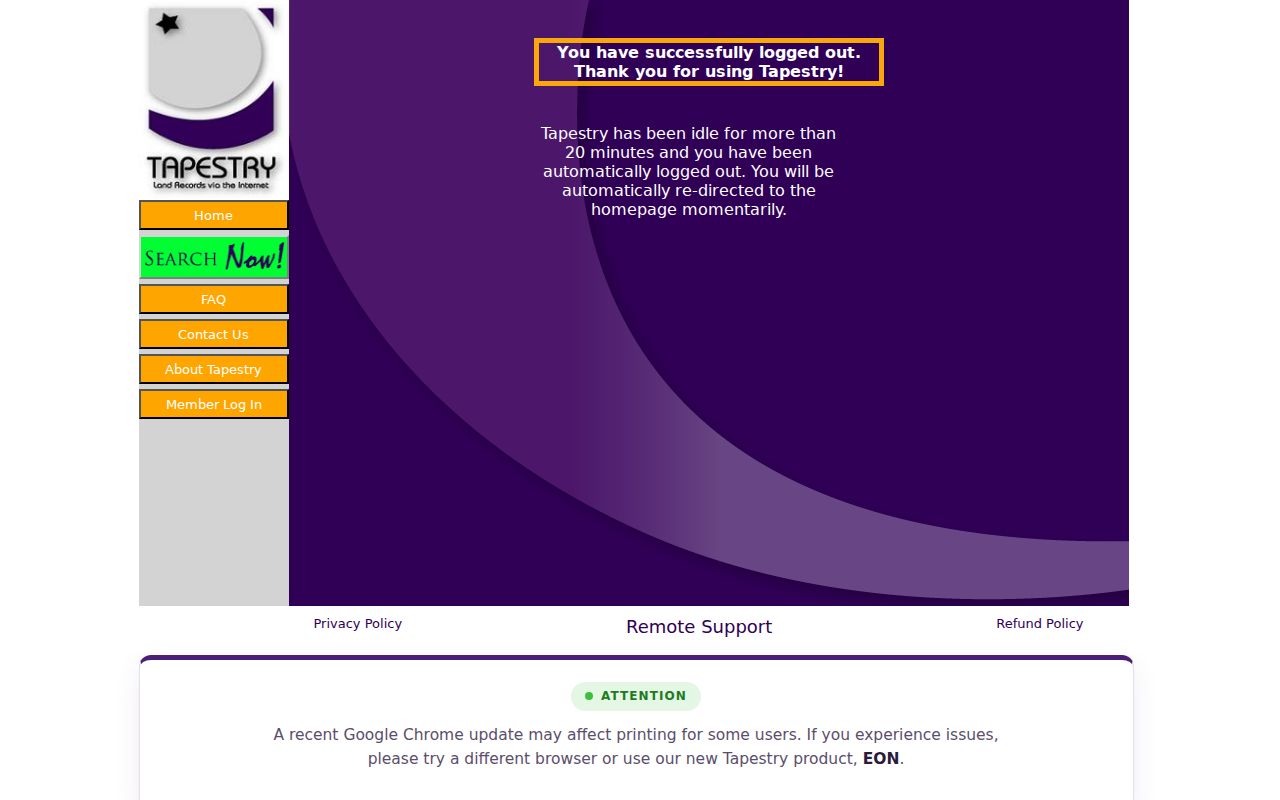
Once a result opens, capture the details. Record the document reference, party roles, recording date, and land description before moving on.
Read the Calumet County Grantor-Grantee Chain
Grantor and grantee mark opposite sides of a deal. A grantee on one deed often becomes the grantor on the next. Work backward from the present. Find the latest deed that names the current owner as grantee, then carry that grantor's name to the earlier purchase deed. Match the legal description at each Calumet County step. A name-only chain can jump to a different farm, town lot, or person with a similar name.
- Locate the latest deed and note the grantee, grantor, date, instrument reference, and land description.
- Search the grantor as a grantee to find the instrument by which that party acquired the land.
- Compare the legal description and parcel context before accepting the next match.
- Repeat until the index stops, then ask about older books or microfilm.
- Grantor
- The party who conveys an interest in the instrument.
- Grantee
- The party receiving the interest named in the instrument.
- Chain of title
- The ordered set of recorded transfers and related instruments for land.
- Book/page or instrument number
- References used to identify a recorded document; copy the form shown in the county record.
Deed Books Beyond the Calumet County Online Years
Calumet County publishes no first Tapestry year. Do not borrow a cutoff from a neighboring county. Ask the staff instead. A grantor/grantee index, tract index, bound book, or microfilm series may cover the date you need. Older records can require a name, an approximate year, a municipality, and a legal description before staff can narrow the search.
Calumet County blends paper indexes with newer online images. The county page describes no fire, flood, or recording gap. A stopped search is a coverage question. It is not proof of a lost deed. At the counter, ask whether a book/page search, tract index, microfilm roll, or plat book comes next, and record the reference staff give you.
Find the Register of Deeds at 206 Court Street in Chilton. Hours run weekdays, 8:00 a.m. to 4:30 p.m. Ask the custodian about older material and certified copies.
Plats and Certified Survey Maps in Calumet County
A Calumet County deed rarely stands alone. A city lot is described by subdivision, block, and lot. A rural parcel turns on section, township, range, and quarter-quarter calls. The recorded plat shows the lot pattern and can note streets, dedications, and easements. A certified survey map, or CSM, splits a parent parcel without a new subdivision plat. Calumet County reviews minor and major divisions in both incorporated and unincorporated areas. The Register of Deeds holds the recorded instrument.
Chain-of-title questions call for the plat name or the legal description. That language connects an old deed to the present parcel. The county map shows current geometry, but older deeds may still name a parent tract. Compare both sources. The parcel ID never replaces the recorded description. An old lot can be renumbered or divided, leaving different identifiers in later records.
The county's land-division page lists preliminary and final plat review and links CSM-related applications. The recorded plat or survey remains the source for the land description.
Calumet County Mortgages, Releases, and Easements
Deed research in Calumet County turns up instruments that transfer no land. A mortgage creates a recorded security interest. An assignment names a new creditor. A release or satisfaction should tie back to the original filing. An easement can grant access or utility rights across the land. A construction lien, restriction, or lis pendens can affect what a buyer must review. Search the legal description and party names first. Then read the image instead of trusting the index label.
The Calumet County recorder also posts fees, recording requirements, plat materials, and e-recording details. When a transfer form or tax bill cites a jacket, page, or image, carry that reference into the deed search. A lien may have a separate court file. A pending case may appear in WCCA. The court docket and deed index work as related evidence. Yet one cannot replace the other.
Legal priority, or the effect of an unresolved lien, belongs with a title professional or attorney. A deed page helps locate filings, but it cannot issue a title opinion.
Calumet County Fraud Alerts and Deed Copies
The Register of Deeds page links Calumet County's Property Fraud Alert service. Open the alert signup from the county office page. Never use a message or paid solicitation. Before sending money or personal information, check any notice about a recorded deed against the official instrument number. Also verify it against the county's own contact details.
A Tapestry image is just a printed page for review. A certified copy is different. It is an official copy issued by the custodian under its own process. Ask the Register of Deeds whether the document needs certification. Ask whether it can be ordered by mail. Ask also what copy or certification fees apply. The county's public Tapestry fee notice gives search and image-print prices. Those prices are not a complete certified-copy fee schedule.
The Register of Deeds office page covers alert information, recording requirements, and counter contact. The office sits at 206 Court Street in Chilton, telephone (920) 849-1441.
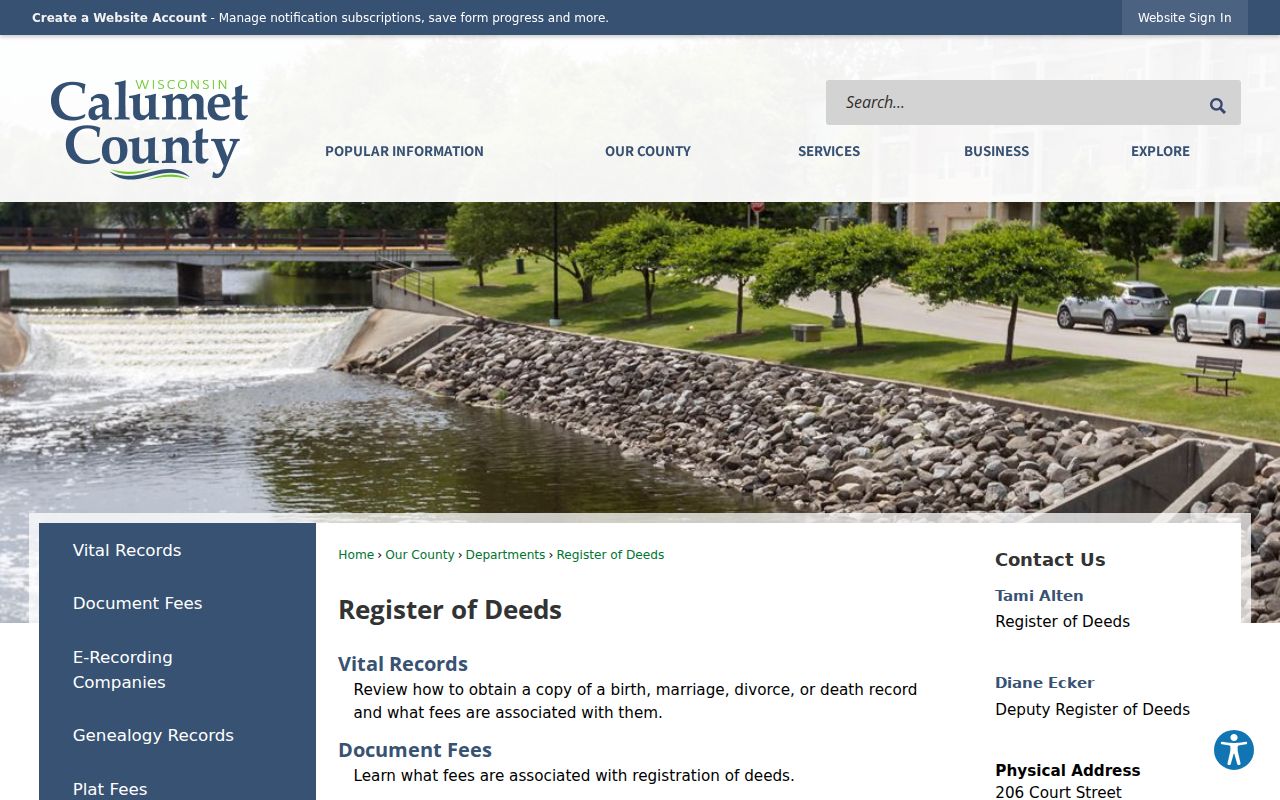
Use the county page to confirm the current service link. Ask staff about any older or certified record request.
Request a Calumet County Deed Copy
For an online review copy, locate the document in Tapestry. Open the free detail first. Pay the image-print fee only if you need a printed page. For an older instrument or a certified copy, contact the Register of Deeds. Give the office party names. Give an approximate recording period, the municipality, and a legal description or document number if you have one. Does the parcel card or tax bill carry a recording reference? Include it in the request.
Calumet County's public pages do not state the earliest indexed year or every certified-copy charge. Call or visit the counter. Staff can establish whether the source sits online, in a book, or on microfilm. They can also confirm what fee applies. The office keeps weekday hours of 8:00 a.m. to 4:30 p.m. Tapestry pricing runs $6.95 per search and $1 per printed image page. Do not assume those prices govern a certified copy of a Calumet County deed.
Recorded, not guaranteed. The Calumet County deed index shows filings of record, not every possible interest or claim. It is not a title opinion, and an attorney or title professional should review a consequential ownership question.